
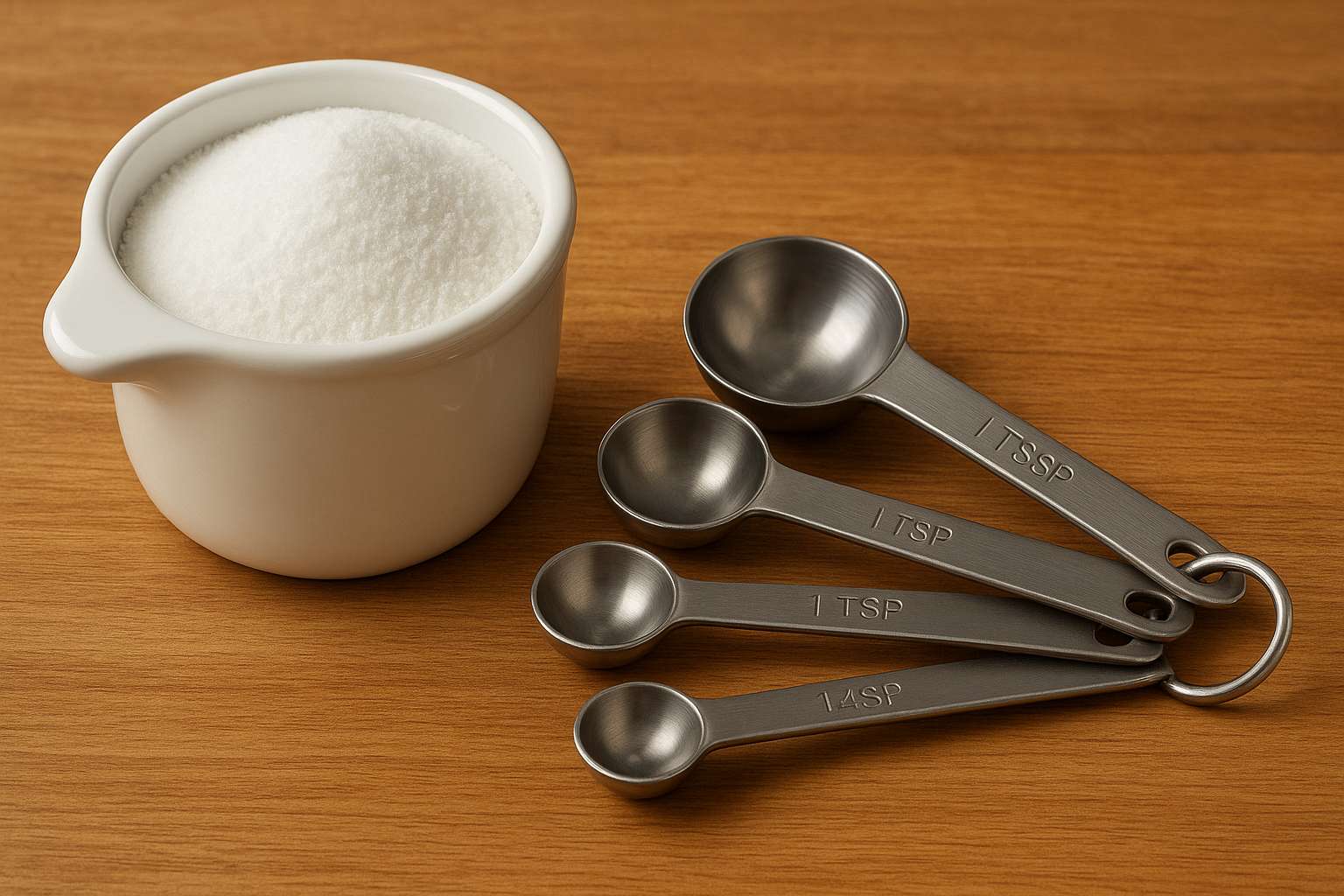
Precision in cooking and baking is far more than a matter of perfectionism — it’s the foundation of consistency. A single small error in measurement can alter the texture of bread, the flavor balance in a sauce, or the rise of a cake. Knowing the exact conversions between units like “cup” and “teaspoon” is therefore essential for anyone who follows recipes from different countries.
However, what seems like a simple question — How many teaspoons are in a cup? — is complicated by the fact that both cup and teaspoon mean different things depending on where you are in the world. The measurement systems of the United States, the United Kingdom, Canada, and Australia each define these units differently, creating confusion when converting recipes internationally.
The goal of this article is to clarify these differences and provide an accurate, detailed breakdown of how many teaspoons make up one cup across major measurement systems.
Basic Units of Measurement
Before comparing systems, it’s important to define what we mean by a teaspoon and a cup.
What Is a Teaspoon?
A teaspoon is a unit of volume most commonly used for measuring small quantities of ingredients — particularly in baking, beverages, sauces, and seasonings. Though the name comes from an everyday utensil, standardized measuring teaspoons differ from actual spoons used for tea or coffee.
In standardized cooking measurements, a teaspoon represents a specific and consistent volume, but that volume differs slightly from country to country. For example, in the United States, a teaspoon measures approximately 4.93 milliliters, while in the metric system used by Australia and Canada, it measures 5 milliliters. In the older British Imperial system, it’s slightly larger still, at about 5.92 milliliters.
What Is a Cup?
A cup is a larger volume unit, typically used for measuring liquids or bulk ingredients like flour, sugar, or rice. It, too, varies in definition between regions. In the United States, a standard measuring cup equals roughly 236.59 milliliters. In the United Kingdom, an Imperial cup measures approximately 284 milliliters, while in Australia and most metric countries, a cup equals 250 milliliters.
Metric vs. Imperial Systems
The metric system, based on milliliters and liters, provides straightforward decimal relationships between units — 1,000 milliliters in a liter, for example. The Imperial and U.S. customary systems, however, use fractions that can make conversions more complex.
For culinary purposes, this difference is significant. Metric recipes typically measure ingredients by volume in milliliters or by weight in grams, ensuring precision and reproducibility. Imperial or customary recipes, on the other hand, often rely on cups, tablespoons, and teaspoons, making the measurement experience more tactile but less standardized internationally.
The United States (U.S. Customary System)
In the U.S., measurements in cups and teaspoons remain dominant in both home and professional kitchens.
1 U.S. cup = 237 milliliters
1 U.S. teaspoon = 4.92892 milliliters
To determine how many teaspoons are in a cup, we divide the milliliters in one cup by the milliliters in one teaspoon:
237 ÷ 4.92892 ≈ 48 teaspoons per cup
This ratio of approximately 48 teaspoons to one cup is standard across American cookbooks, cooking classes, and measuring sets.
Practical Application
American recipes — from cookies to casseroles — use these standard measurements. When a recipe calls for “1 cup of sugar” or “½ teaspoon of salt,” it refers specifically to the U.S. customary units. Using a metric or Imperial teaspoon would slightly alter the ingredient ratio, potentially affecting the final product.
The United Kingdom (Imperial System)
The British Imperial system predates the American customary one, and while they share historical roots, they differ slightly in precise unit sizes.
In modern British cooking, the cup is rarely used as a formal measurement. Recipes in the U.K. typically favor grams for solids and milliliters for liquids, which eliminates ambiguity. Nonetheless, when conversions are necessary, the following equivalencies apply:
1 U.K. cup ≈ 284 milliliters
1 U.K. teaspoon = 5.919 milliliters
Calculating the conversion:
284 ÷ 5.919 ≈ 48 teaspoons per cup
Interestingly, despite the larger overall cup size and the slightly larger teaspoon, the resulting ratio remains nearly identical to that of the U.S. system — around 48 teaspoons per cup.
Historical Context
The Imperial system dates back to 1824, when British authorities sought to unify measurement standards across the empire. While it has since been largely replaced by the metric system in most Commonwealth countries, remnants of it persist in certain traditional recipes and older cookbooks.
Modern Use in the U.K.
Today, if a British recipe mentions “a cup,” it’s likely informal or adapted from American or Australian sources. British cooks typically rely on digital scales rather than volume measures for accuracy. Still, for international readers interpreting older British recipes, understanding this conversion remains valuable.
Canada
Canada presents an interesting case because it historically used the Imperial system but transitioned to metric during the 1970s. As a result, Canadian recipes and cookbooks may contain measurements from both systems, depending on their publication date or intended audience.
Historical and Modern Definitions
Old (Imperial) Canadian cup ≈ 227 milliliters
Modern (metric) Canadian cup = 250 milliliters
Canadian teaspoon ≈ 5 milliliters
Using the modern metric system, the calculation is simple:
250 ÷ 5 = 50 teaspoons per cup
If an older recipe uses Imperial measurements, however, the conversion would yield a slightly different figure — closer to 45 or 46 teaspoons per cup.
Practical Implications
This variation highlights the transitional nature of Canada’s culinary standards. Many Canadian kitchens contain both metric and Imperial tools, so verifying the measurement system of a given recipe remains essential. Most contemporary Canadian recipes now align with metric standards, ensuring consistency with international norms.
Australia
Australia uses a fully standardized metric system for cooking and baking, with its own defined set of measuring spoons and cups. These standards are enforced nationally, ensuring that Australian measurements are uniform across recipes and brands.
1 Australian cup = 250 milliliters
1 Australian teaspoon = 5 milliliters
Dividing these gives:
250 ÷ 5 = 50 teaspoons per cup
Consistency and Standardization
Australia’s approach is one of the most precise globally. Measuring tools are manufactured according to the same national standards, which means an “Australian teaspoon” or “Australian cup” is always exactly the same volume. This eliminates much of the confusion seen in other regions.
Culinary Impact
Because of this precision, recipes from Australia tend to yield consistent results, even when reproduced internationally — provided the cook adjusts for the local measurement system. The simplicity of the metric relationship (1000 milliliters per liter, 250 milliliters per cup, 5 milliliters per teaspoon) also makes conversions straightforward.
Comparative Table
Country | Cup Volume (ml) | Teaspoon Volume (ml) | Teaspoons per Cup |
|---|---|---|---|
United States | 237 ml | 4.93 ml | ~48 |
United Kingdom | 284 ml | 5.92 ml | ~48 |
Canada | 250 ml | 5 ml | 50 |
Australia | 250 ml | 5 ml | 50 |
This table clearly illustrates that, depending on the system, one cup equals between 48 and 50 teaspoons. While the differences seem small, they can make a noticeable impact on recipes that depend on precise ratios, especially in baking or confectionery.
Why These Differences Matter
At first glance, a difference of two teaspoons per cup may appear trivial, but in recipes requiring multiple cups or involving delicate chemical reactions, it can become significant. For instance, a dough that depends on exact hydration ratios or a custard with tight emulsification limits might fail if measurements are off even by a few milliliters.
Cross-Cultural Confusion in Recipes
In today’s digital age, recipes circulate globally. A baker in London might follow a recipe written in New York, while a home cook in Sydney might try a dish from Toronto. Without clarifying which “cup” or “teaspoon” is intended, the results may differ from the original author’s expectations.
For example, using an Australian metric cup (250 ml) in a U.S. recipe that assumes a 236.59 ml cup adds nearly 6% more liquid — enough to make batter runnier, dough stickier, or sauces thinner. Conversely, using smaller U.S. teaspoons in a British recipe could result in under-seasoning or insufficient leavening.
Ingredient Density and Measurement Error
Another subtle factor is ingredient density. Flour, sugar, salt, and other solids pack differently depending on humidity, how they’re scooped, and even the brand. Because of this, precise conversions in milliliters — or better yet, grams — are more reliable than those based purely on volumetric tools.
Professional vs. Home Contexts
Professional kitchens typically work with weights (grams or ounces) rather than volume, eliminating discrepancies. Home cooks, however, often rely on measuring cups and spoons. Understanding which measurement system a recipe uses helps bridge this gap, leading to more consistent outcomes.
Broader Perspective on Measurement Systems
The variation between teaspoons and cups across countries is a reflection of broader historical and cultural differences in measurement systems.
Evolution of Units
The cup originated as an informal household measure long before standardization. Its exact size varied from region to region, depending on local custom. Only in the late 19th and early 20th centuries did standardized measuring tools become common in North America and parts of Europe.
Similarly, the teaspoon evolved from tableware into a unit of measurement. The transition to exact definitions — such as the U.S. teaspoon equaling precisely 1/3 of a tablespoon — occurred to improve recipe reliability and reproducibility.
Metrication and Globalization
As more countries adopted the metric system, the culinary world began slowly converging toward a unified standard. Yet cultural inertia — particularly in the United States — means that traditional measurements remain dominant.
For the modern cook, this diversity can be both a challenge and an opportunity. Understanding conversions deepens one’s grasp of culinary science and enables accurate adaptation of recipes from around the world.
Conclusion
So, how many teaspoons are in a cup?
The answer depends on where you are:
In the United States, about 48 teaspoons make one cup.
In the United Kingdom, the figure is also roughly 48 teaspoons, though “cup” is seldom used there.
In Canada and Australia, the metric standard gives 50 teaspoons per cup.
Across these systems, the difference is small but measurable — about 4% between the smallest and largest definitions.
For precise cooking and baking, especially when working with international recipes, it’s best to think in milliliters rather than cups or teaspoons. Doing so eliminates ambiguity, ensures consistency, and brings clarity to the art and science of cooking.
In essence, while the world’s kitchens may measure differently, they all share the same goal: transforming ingredients into something harmonious, balanced, and delicious. And understanding exactly how many teaspoons fit into a cup is one small but meaningful step toward that goal.