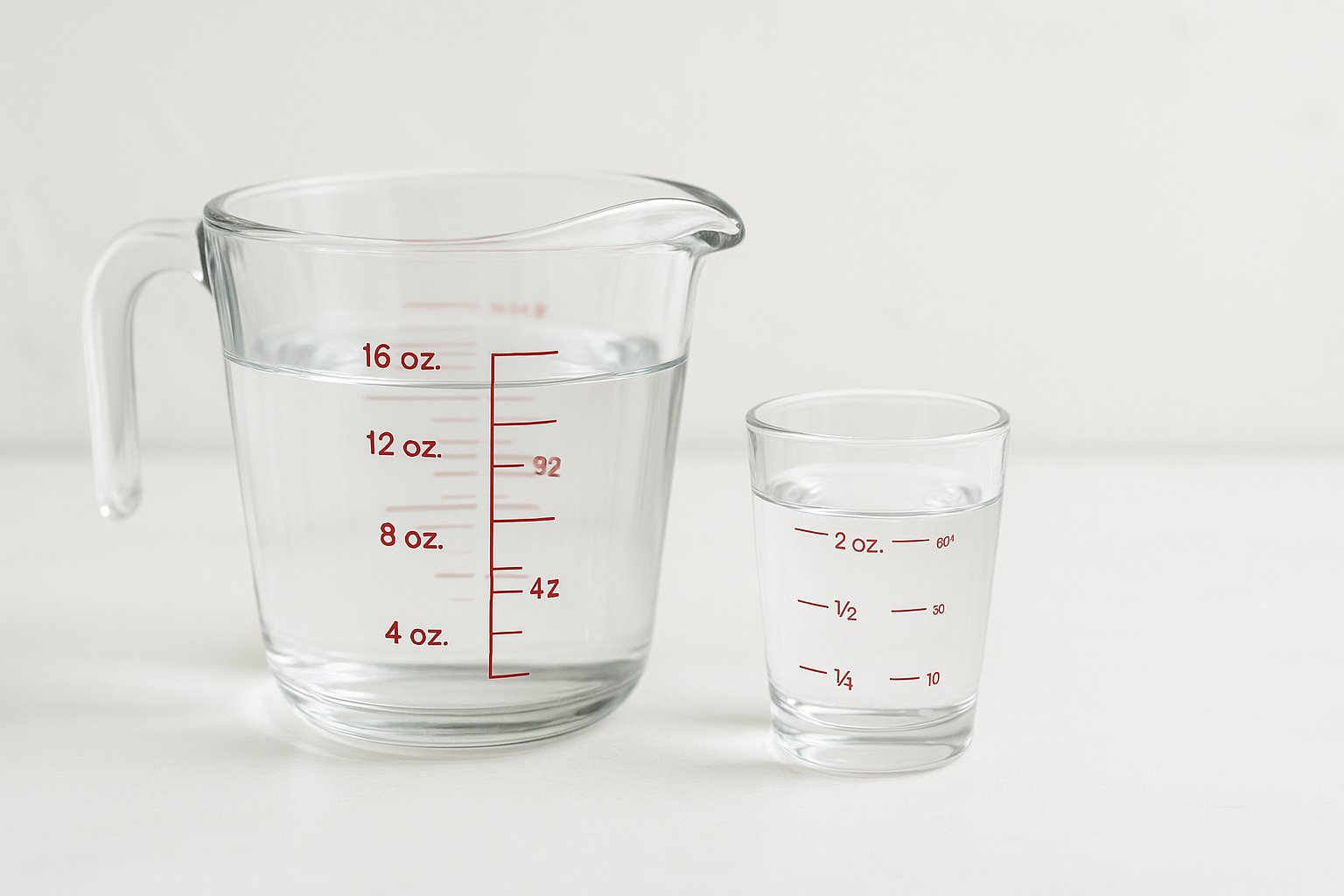
In daily life, units of liquid measurement play an essential role. Whether you’re cooking, staying hydrated, exercising, or working in healthcare, understanding how to measure liquids accurately can make a real difference. One of the most common questions people ask, especially in the United States, Canada, and Australia, is:
How many ounces are in a gallon?
At first glance, it might seem like a simple question. Yet, confusion often arises because not all gallons or ounces are created equal. Different systems of measurement — the U.S. customary system and the British imperial system — define these units differently. On top of that, many people mix up fluid ounces (which measure volume) and ounces (which measure weight).
It’s important to note that a U.S. gallon and a U.K. (Imperial) gallon are not the same — the Imperial gallon is about 20% larger.
This article takes a clear, factual approach to explain the relationship between ounces and gallons, outline the differences between measurement systems, and illustrate how these conversions matter in real-world contexts.
The Simple Answer: How Many Ounces Are in a Gallon
Let’s get straight to the point.
1 U.S. gallon = 128 U.S. fluid ounces (fl oz).
1 U.K. (Imperial) gallon = 160 U.K. fluid ounces (fl oz).
That’s the official definition in each respective measurement system. The U.S. customary system is used primarily in the United States and occasionally referenced in Canada and Australia for specific industries or everyday purposes. Meanwhile, the U.K. Imperial system is still recognized in the United Kingdom and in certain Commonwealth contexts.
So if you’re measuring liquid in a standard American context, 128 fl oz make up one U.S. gallon.
Half a gallon equals 64 fl oz, and a quarter gallon equals 32 fl oz.
In contrast, a U.K. Imperial gallon holds 160 fl oz, meaning it’s about 20% larger than the U.S. gallon.
This difference is particularly important when interpreting international recipes, brewing guides, or industrial mixing instructions. A gallon of milk in a British recipe represents a greater volume than a gallon in an American one — a detail that can alter proportions and outcomes significantly.
These conversions are essential in cooking, beverage preparation, fitness tracking (for example, measuring daily water intake), as well as laboratory and medical work, where precision in liquid measurement is critical.
Measurement Systems: U.S. vs. Imperial
Here’s where much of the confusion begins. There are two different gallon systems in common use — the U.S. gallon and the Imperial gallon (used historically in the U.K. and some Commonwealth countries).
Measurement System | Gallon Definition | Equivalent in Fluid Ounces |
|---|---|---|
U.S. Customary System | 1 U.S. gallon | 128 fl oz |
U.K. Imperial System | 1 Imperial gallon | 160 fl oz |
That’s a significant difference. The Imperial gallon is about 20% larger than the U.S. gallon. In other words, 1 Imperial gallon ≈ 1.2 U.S. gallons.
If you follow recipes, brewing guides, or liquid measurements from international sources, always check which system they use. A recipe written in the U.K. that calls for one gallon of milk means 160 fl oz, while a U.S. recipe calling for a gallon means 128 fl oz. Mixing these up can completely change proportions, taste, or consistency.
Australia, while officially metric, still occasionally uses both Imperial and U.S. units informally, particularly in older recipes or product packaging. Understanding which gallon is being referenced ensures precision no matter where the information originates.
Types of Ounces: Fluid vs. Weight
Another key point that trips people up is the difference between fluid ounces and ounces by weight.
Fluid ounce (fl oz) — measures volume (how much space a liquid occupies).
Ounce (oz) — measures weight or mass.
These two are not interchangeable. For example, 8 fluid ounces of water is a volume measurement, not a weight. In terms of weight, those 8 fl oz of water equal approximately 8.34 ounces by weight, because water has a specific density. But if you were measuring 8 fl oz of olive oil, it would weigh less than 8.34 oz, since oil is less dense than water.
When you ask, “How many ounces are in a gallon?” you are referring specifically to fluid ounces (fl oz), not weight ounces. Keeping this distinction clear is crucial for accurate conversions, especially in cooking and scientific contexts.
Conversion Table: Ounces in Gallons (U.S. and U.K. Imperial)
To make conversions easier, the following chart shows how fluid ounces (fl oz) correspond to gallons in both the U.S. customary system and the U.K. Imperial system.
Remember that U.S. gallons and Imperial gallons are not the same size:
1 U.S. gallon = 128 U.S. fluid ounces
1 Imperial gallon = 160 Imperial fluid ounces
Because the Imperial gallon is larger, the same number of gallons will contain more fluid ounces when measured in the U.K. system.
Below is a comparison showing how the same number of gallons converts differently in the U.S. and U.K. systems.
Conversion Table: U.S. Gallon vs. U.K. (Imperial) Gallon
Gallons (in each system) | U.S. Gallon → U.S. Fluid Ounces (fl oz) | U.K. (Imperial) Gallon → Imperial Fluid Ounces (fl oz) |
|---|---|---|
1 | 1 U.S. gallon = 128 fl oz | 1 Imperial gallon = 160 fl oz |
0.5 | 0.5 U.S. gallon = 64 fl oz | 0.5 Imperial gallon = 80 fl oz |
0.25 | 0.25 U.S. gallon = 32 fl oz | 0.25 Imperial gallon = 40 fl oz |
2 | 2 U.S. gallons = 256 fl oz | 2 Imperial gallons = 320 fl oz |
5 | 5 U.S. gallons = 640 fl oz | 5 Imperial gallons = 800 fl oz |
As you can see, each Imperial measurement contains 25% more fluid ounces than its U.S. counterpart.
This difference is significant when following recipes, brewing instructions, or industrial mixing ratios from various countries. For instance, if a British recipe calls for one gallon of liquid, using an American gallon instead would reduce the volume by about one-fifth, potentially affecting results such as taste, texture, or concentration.
Understanding this distinction ensures accurate conversions and helps maintain consistency whether you’re working in the United States, Canada, or Australia, where both systems may occasionally appear in use.
Real-Life Examples
Let’s put these conversions into context.
Example 1: Daily Water Intake
Suppose you’re trying to drink one gallon of water per day, but you only have 16 fl oz bottles. Since 1 gallon = 128 fl oz:
128 ÷ 16 = 8 bottles.
That means you’ll need to drink eight 16-ounce bottles to reach one gallon. This example is often used in fitness tracking or hydration goals.
Example 2: Cooking or Baking
Imagine a recipe calling for half a gallon of milk, but your measuring tools only show ounces. Multiply:
0.5 × 128 = 64 fl oz.
So, you’ll need 64 fluid ounces of milk for that recipe.
Example 3: Beverage Preparation
Let’s say you’re preparing homemade iced tea for a party, and your container holds 2 gallons. You now know that:
2 × 128 = 256 fl oz.
This helps you correctly balance sugar, ice, or flavoring without guesswork.
Understanding these conversions ensures your results are consistent and prevents costly mistakes in proportions.
FAQ:
How many ounces are in half a gallon?
There are 64 U.S. fluid ounces in half a gallon.
How many ounces are in a quarter gallon?
A quarter gallon equals 32 U.S. fluid ounces.
Can I use weight ounces instead of fluid ounces?
No — fluid ounces measure volume, while weight ounces measure mass. They’re related only through density. For example, 8 fl oz of honey weigh more than 8 oz of water.
What’s the difference between a U.S. gallon and a U.K. gallon?
The U.S. gallon contains 128 fl oz, while the U.K. (Imperial) gallon contains 160 fl oz. The Imperial gallon is larger.
Are ounces the same everywhere?
No. The size of a fluid ounce differs between systems.
1 U.S. fluid ounce = 29.5735 milliliters
1 Imperial fluid ounce = 28.4131 milliliters
So even if both are called “ounces,” they’re not identical in volume.
How many liters are in a gallon?
1 U.S. gallon = 3.785 liters
1 Imperial gallon = 4.546 liters
This is useful when switching between metric and customary systems.
Conclusion
Understanding how many ounces are in a gallon is more than just trivia — it’s a foundational piece of practical knowledge that applies to everyday life. Whether you’re measuring water, milk, cleaning solutions, or even fuel, the ability to convert between gallons and ounces accurately saves time and prevents mistakes.
Here’s what to remember:
1 U.S. gallon = 128 U.S. fluid ounces
1 Imperial gallon = 160 Imperial fluid ounces
1 U.S. gallon ≈ 3.785 liters
1 Imperial gallon ≈ 4.546 liters
Always make sure you’re using the correct system (U.S. or Imperial) and the correct type of ounce (fluid vs. weight). This small detail ensures big accuracy.
For those who frequently deal with measurements — in the kitchen, lab, or gym — it’s wise to keep a conversion chart or use an online converter. They’re quick, reliable tools that eliminate guesswork and ensure your results stay consistent.
Knowing the relationship between ounces and gallons simplifies many tasks: adjusting recipes, tracking hydration, measuring chemicals, or calculating fuel efficiency. It’s one of those pieces of knowledge that quietly supports precision and consistency across countless daily activities.
So, the next time someone asks, “How many ounces are in a gallon?”, you’ll have the confident, exact answer ready:
There are 128 fluid ounces in one U.S. gallon and 160 fluid ounces in one Imperial gallon.
Keep this in mind, bookmark a conversion chart if needed, and enjoy the clarity that comes from understanding this simple yet essential measurement relationship.