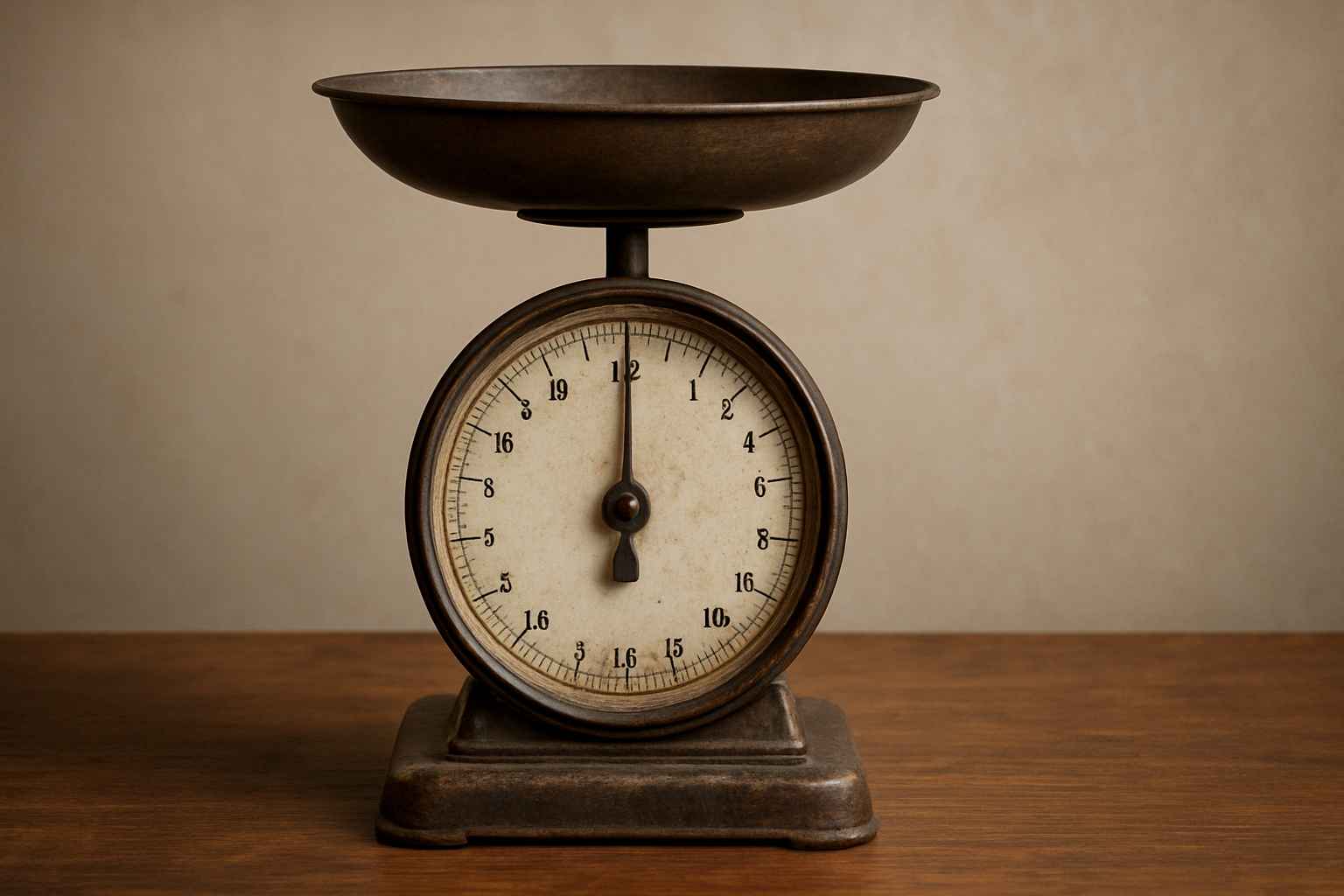
Weight measurement may seem minor, but it plays an important role in everyday life—from cooking and shipping to shopping and fitness tracking. Understanding the relationship between pounds (lb) and ounces (oz) helps make decisions more accurate and efficient.
Knowing that 1 pound = 16 ounces saves time and prevents mistakes, whether you’re following a recipe or weighing products. It’s not just useful for cooks or athletes—it’s also essential for commerce, packaging, and logistics.
The Quick Answer
Let’s start with the fundamental fact:
✅ 1 pound = 16 ounces
This conversion applies to the avoirdupois system, the most widely used weight measurement system in the United States and many other countries for everyday goods, food, and non-precious materials.
There are other systems, like the troy system, used mainly for measuring precious metals such as gold or silver, but for everyday purposes—food, groceries, shipping, and fitness—the avoirdupois pound is the one you’ll encounter.
So, whenever you see 1 lb on a label or in a recipe, it means 16 oz.
Modern Applications of Pounds and Ounces
Let’s explore where this simple relationship appears in daily life.
a. Cooking and Baking
Cooking is one of the most common situations where you’ll need to understand ounces and pounds. Recipes often mix the two: for example, meat and butter might be listed in pounds, while spices or sugar appear in ounces.
Imagine you’re preparing a meal that requires 2 pounds of beef. To portion it out more precisely, you might want to know the equivalent in ounces:
2 lb × 16 = 32 oz
This helps when scaling recipes or dividing portions for meal prep. Similarly, if a recipe mentions 8 oz of flour, you instantly know it’s half a pound—useful when doubling or halving recipes.
In professional kitchens, precise weight conversion ensures consistency. Home cooks benefit too: understanding the relation between ounces and pounds means you can substitute ingredients correctly, balance portions, and reduce waste.
b. Fitness and Nutrition
For anyone monitoring food intake or tracking macronutrients, the ounce-to-pound conversion is a daily essential. Many food packages list weight in ounces, while nutrition guides or meal plans refer to pounds.
For instance:
A standard 1-pound (16-ounce) pack of chicken breast might be divided into four 4-ounce portions—each containing roughly 25–30 grams of protein.
Protein powders or supplements are often sold in 1 lb containers, meaning 16 oz total of powder.
This understanding makes portion control easier. When you weigh your food or record it in a tracking app, converting between ounces and pounds ensures you’re staying accurate with calorie and nutrient intake.
c. Online Shopping and Product Descriptions
When browsing online stores, you’ll notice that many items—especially groceries, cosmetics, or health supplements—list their weights in ounces or pounds. Understanding the conversion helps compare value-for-money between similar items.
For example:
A product listed as 24 oz may cost the same as another listed as 1.5 lb. Knowing that 1.5 lb = 24 oz lets you quickly see they’re equivalent.
This saves you from paying more for less or misunderstanding product sizes. For international shoppers, knowing conversions can also help interpret listings when systems differ between metric (grams, kilograms) and imperial (ounces, pounds).
d. Shipping and Delivery
Weight determines the cost of shipping. Most postal and courier services use ounces and pounds to calculate rates—particularly for small packages.
For lightweight items, ounces provide a finer scale for accuracy. For example:
13 oz package might be sent through a less expensive mailing option than a 1 lb package, even though the difference is small.
If you frequently send parcels or run a small business, converting between ounces and pounds allows you to estimate postage costs more effectively. Understanding the cutoff points for weight-based pricing ensures you don’t overpay.
Common Conversion Examples
Below is a practical reference for everyday conversions:
Pounds (lb) | Ounces (oz) |
|---|---|
0.5 lb | 8 oz |
1 lb | 16 oz |
2 lb | 32 oz |
3 lb | 48 oz |
4 lb | 64 oz |
5 lb | 80 oz |
10 lb | 160 oz |
To remember the conversion:
Formula 1: Pounds × 16 = Ounces
Formula 2: Ounces ÷ 16 = Pounds
Example 1:
If you have 5 pounds of apples, then:
5 × 16 = 80 ounces
Example 2:
If a bag of nuts weighs 24 ounces, then:
24 ÷ 16 = 1.5 pounds
Keeping this simple formula in mind means you can convert instantly—no need for complex math.
Frequently Asked Questions
a. Are Ounces the Same in All Countries?
Not exactly. The ounce can refer to slightly different values depending on the system used:
In the avoirdupois system (used in the U.S. and a few other countries), 1 ounce = 28.3495 grams.
In the troy system (used for precious metals), 1 troy ounce = 31.1035 grams.
For all regular goods, cooking ingredients, and postal weights, the avoirdupois ounce is standard. Only when dealing with gold, silver, or gemstones do you need to consider the troy ounce.
b. Do Other Countries Use Pounds and Ounces?
While most of the world uses the metric system (grams and kilograms), pounds and ounces remain common in the United States, United Kingdom, and a few other regions for daily use. However, even in countries that primarily use the metric system, pounds and ounces often appear on packaging for international trade or when targeting American markets.
For example, a product might display both units:
500 g (17.6 oz) — allowing consumers from different systems to understand the quantity.
c. Do I Need to Know About Troy Ounces?
Only if you’re working with or purchasing precious metals such as gold, silver, or platinum. For everything else—food, packaging, shipping—stick with the standard 16 ounces per pound rule.
Conversion Tools and Aids
Even though manual conversion is simple, various tools make it even more effortless.
a. Online Converters
Web-based calculators can convert ounces to pounds (and vice versa) in a second. Simply enter your number and get instant results. Such tools are particularly helpful when dealing with larger or fractional values.
https://convertyze.com/units/weight-and-mass/
b. Smart Scales
Modern digital kitchen or postal scales often include a unit switch button, allowing you to toggle between ounces, pounds, grams, and kilograms. This flexibility means you can measure in one system and convert instantly to another.
c. Mobile Apps
Many mobile apps combine weight conversion with additional features like recipe scaling, calorie tracking, or shipping cost estimates. They’re handy for travelers or small business owners dealing with both imperial and metric units.
However, while tools are convenient, understanding the base conversion (1 lb = 16 oz) ensures you’re not dependent on technology for simple calculations.
How to Remember the Conversion Easily
Here are some memory tricks to lock it in:
Think in multiples of 8. Since 1 lb = 16 oz, half a pound = 8 oz, and a quarter pound = 4 oz. These are common divisions in recipes and packaging.
Visualize everyday items:
A small steak might weigh 8 oz (½ lb).
A loaf of bread might weigh around 1 lb (16 oz).
A large bag of sugar could be 5 lb (80 oz).
Use proportional thinking: doubling or halving is simple when you know the 16-oz base.
For instance, 2 lb = 32 oz, 3 lb = 48 oz, and so forth.
Once you internalize this pattern, conversions become almost automatic.
Practical Scenarios
Let’s apply the conversion to several real-life examples.
Example 1: Cooking a Family Meal
A recipe for a family of four calls for 3 pounds of chicken. You buy chicken sold in 12-ounce packages.
How many packages do you need?
3 lb × 16 = 48 oz total needed.
48 ÷ 12 = 4 packages.
Example 2: Ordering Protein Powder
You find one container labeled 1 lb, another 24 oz, and another 2 lb.
Which gives more value?
1 lb = 16 oz
2 lb = 32 oz
24 oz = 1.5 lb
So the 2-lb option gives double the content of the 1-lb pack.
Example 3: Shipping a Small Parcel
You’re sending a small box weighing 20 oz.
Convert to pounds: 20 ÷ 16 = 1.25 lb.
Some shipping services round to the nearest ounce for small parcels—knowing your package’s exact weight helps choose the correct postage.
Example 4: Tracking Weight Loss
If you track your weight and want to convert a change of 3 pounds into ounces for detail:
3 × 16 = 48 ounces lost—a helpful metric for precise tracking.
Example 5: Grocery Comparison
A store sells rice in 5 lb bags and another in 80 oz bags.
Since 5 × 16 = 80, they’re identical in weight—only the labeling differs.
Common Mistakes to Avoid
Even simple conversions can lead to errors if not approached carefully. Here are a few things to watch for:
Mixing weight and fluid ounces
– Fluid ounces measure volume, not weight. While 16 fluid ounces of water roughly equals 1 pound by coincidence, this is not true for all substances (like oil or honey). Always ensure you’re dealing with weight ounces.
Confusing troy ounces with regular ounces
– The troy ounce is heavier. Don’t apply it to food or shipping weights.
Ignoring rounding differences
– Some scales or labels round weights up or down slightly. Always check for precision when accuracy matters (for example, in fitness or professional cooking).
Switching between systems without awareness
– When working internationally, confirm whether a value is in grams/kilograms or ounces/pounds to avoid miscalculations.
Historical Context: Where Pounds and Ounces Came From
The pound and ounce have long, intertwined histories rooted in trade and craftsmanship.
The pound originates from the Latin word pondus, meaning "weight."
The ounce comes from uncia, meaning "one-twelfth part."
Over centuries, different regions used slightly different versions. Eventually, the avoirdupois system became standard for everyday goods, defining 1 pound as 16 ounces. Meanwhile, the troy system (12 ounces per pound) remained for precious metals and apothecary purposes.
Understanding this history helps explain why different ounces still exist today, though the avoirdupois version dominates most practical uses.
Quick Conversion Reference Chart
Ounces (oz) | Pounds (lb) | Equivalent in Grams (approx.) |
|---|---|---|
1 oz | 0.0625 lb | 28.35 g |
4 oz | 0.25 lb | 113.4 g |
8 oz | 0.5 lb | 226.8 g |
16 oz | 1 lb | 453.6 g |
32 oz | 2 lb | 907.2 g |
80 oz | 5 lb | 2268 g |
Having this chart handy—printed, saved on your phone, or bookmarked—makes conversions effortless.
Everyday Benefits of Knowing This Conversion
Understanding ounces and pounds provides advantages beyond convenience:
Saves money by comparing unit prices accurately.
Improves cooking results with precise ingredient measurements.
Enhances fitness tracking through exact food weighing.
Optimizes shipping costs by knowing when a package crosses pricing thresholds.
Builds confidence in interpreting labels, recipes, or international packaging.
It’s a small piece of knowledge that adds efficiency to everyday life.
Summary and Final Thoughts
Let’s recap the essentials:
1 pound = 16 ounces (avoirdupois system).
Used mainly in cooking, shopping, shipping, and fitness.
Quick formulas:
Pounds × 16 = Ounces
Ounces ÷ 16 = Pounds
For precious metals, the troy ounce (31.1 g) is used, but not in regular contexts.
Most countries now use the metric system, yet pounds and ounces remain vital for everyday life in the U.S. and in international trade.
Knowing this conversion simplifies daily tasks—from preparing meals to comparing prices online.
Keep a small conversion table nearby or memorize the key relationship. Whether you’re baking bread, shipping a gift, or checking the weight of workout supplements, this knowledge ensures accuracy and confidence.
Conclusion
At its core, this topic is simple but incredibly useful. Knowing that 1 pound equals 16 ounces can streamline your cooking, shopping, fitness tracking, and mailing routines. It’s one of those everyday facts that quietly supports practical living.
If you remember only one thing, make it this:
There are 16 ounces in a pound — and understanding that conversion keeps your measurements, purchases, and recipes perfectly balanced.