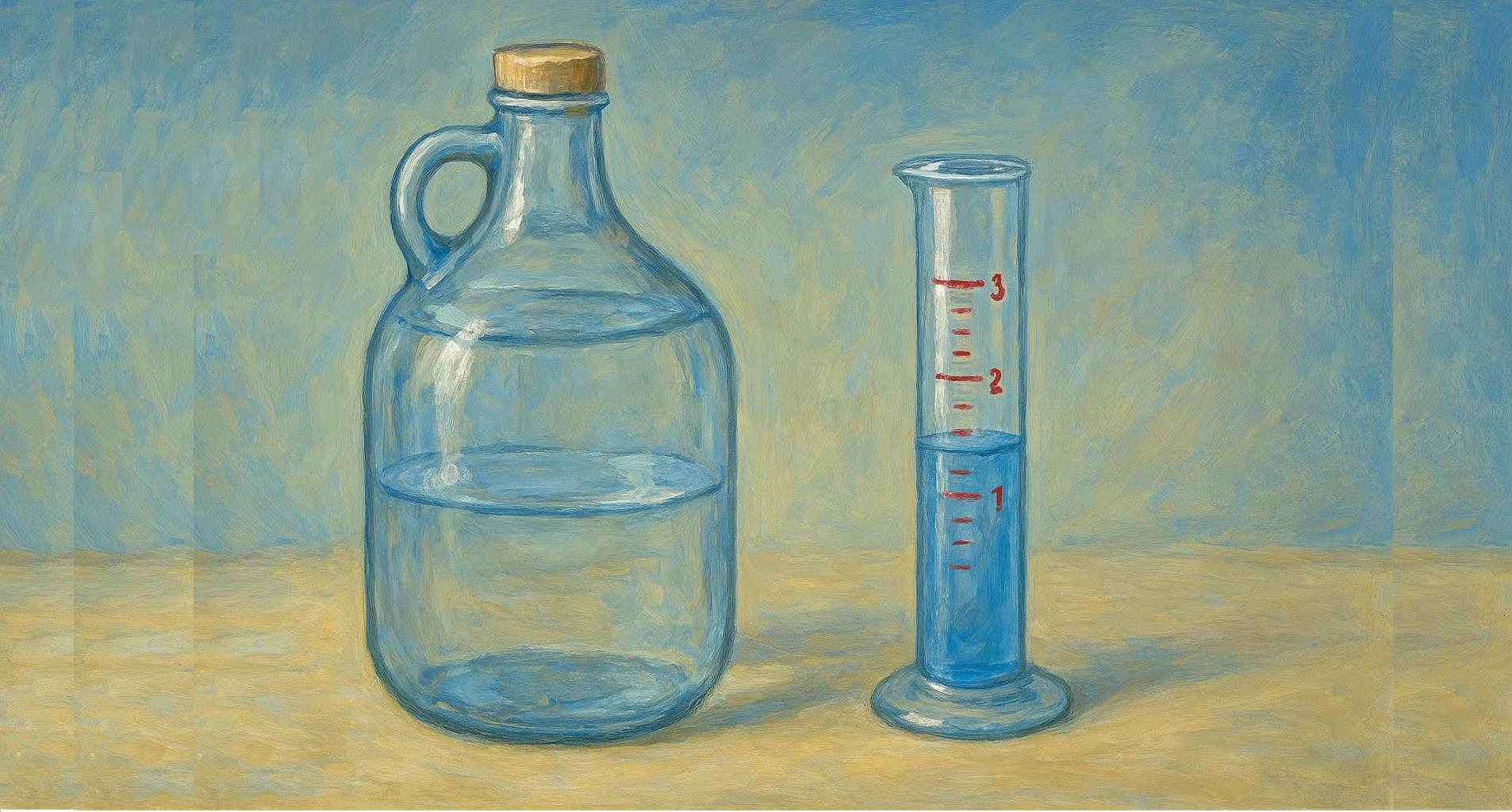
Understanding how many liters are in a gallon is more than a quick math question — it’s about bridging two measurement systems that dominate global use: the Imperial (and its US derivative) and the metric systems. Whether you’re reading a vehicle’s fuel economy, comparing recipes, studying scientific data, or shipping liquids internationally, knowing how to accurately convert gallons to liters and back ensures precision and consistency.
This article explores the origin of the gallon, the numerical differences between the US gallon and the UK (Imperial) gallon, and presents detailed conversion tables and formulas that make switching between these units completely clear.
The Origin and Definition of the Gallon
The word “gallon” has deep historical roots. It stems from Old Northern French galon, derived from the medieval Latin gallēta or galleta, once used to measure wine and ale in trade. However, in early Europe, a gallon wasn’t a single fixed volume — it changed depending on region, commodity, and even temperature.
By the 19ᵗʰ century, both the United States and the United Kingdom standardized their systems of measurement, but they did so independently, leading to two distinct gallon definitions that persist today:
Type of Gallon | Measurement System | Definition | Equivalent in Liters |
|---|---|---|---|
US Gallon (Liquid) | US Customary | 231 cubic inches | 3.785411784 L |
UK (Imperial) Gallon | Imperial System | Volume of 10 lb of water at 62°F (17°C) | 4.54609 L |
These two values differ by nearly 20 percent, which is why it’s critical to specify which gallon you’re using in any conversion or calculation.
Metric Context: The Liter
A liter (L) is a unit of volume within the metric system, defined as the volume of a cube measuring 10 cm × 10 cm × 10 cm.
In precise scientific notation:
1 L = 1 dm³ = 1 000 cm³ = 0.001 m³
The metric system is decimal-based, which makes it much easier to scale up or down — a key reason why most countries have fully adopted it. Liters are used for everything from beverages and fuel to industrial chemistry and medical solutions.
US Gallon vs UK Gallon: Core Differences
The US gallon (gal₍US₎) and UK gallon (gal₍UK₎) share the same name but have different historical origins and physical definitions.
US Gallon: Defined as 231 cubic inches, which corresponds to 3.785411784 L.
UK Gallon (Imperial): Based on 10 lb of water at a defined temperature and pressure, equal to 4.54609 L.
Numerical Comparison
1 gal₍UK₎ = 1.20095 × gal₍US₎
1 gal₍US₎ = 0.83267 × gal₍UK₎
So, an Imperial gallon is about 20 % larger than a US gallon.
Practical Usage
United States: Fuel, beverages, and many liquid products still use gal₍US₎.
United Kingdom & Commonwealth countries: Officially metric, but legacy Imperial measures (like gal₍UK₎) persist in certain references, such as older vehicle specs or brewery volumes.
Canada & Australia: Metric for all trade, but Imperial measures may still appear in older documentation.
Conversion Formulas
When converting between gallons and liters, use the correct constant depending on the gallon type.
Gallons → Liters
US Gallon to Liters
L = GAL₍US₎ × 3.785411784UK Gallon to Liters
L = GAL₍UK₎ × 4.54609
Liters → Gallons
Liters to US Gallons
GAL₍US₎ = L ÷ 3.785411784Liters to UK Gallons
GAL₍UK₎ = L ÷ 4.54609
Conversion Table — Gallons to Liters (US & UK)
Gallons | US Gallons → Liters | UK Gallons → Liters |
|---|---|---|
1 gal | 3.785 L | 4.546 L |
2 gal | 7.571 L | 9.092 L |
3 gal | 11.356 L | 13.638 L |
4 gal | 15.142 L | 18.184 L |
5 gal | 18.927 L | 22.730 L |
6 gal | 22.712 L | 27.276 L |
7 gal | 26.498 L | 31.822 L |
8 gal | 30.283 L | 36.368 L |
9 gal | 34.068 L | 40.914 L |
10 gal | 37.854 L | 45.460 L |
20 gal | 75.708 L | 90.920 L |
50 gal | 189.271 L | 227.304 L |
100 gal | 378.541 L | 454.609 L |
This table makes it easy to visually estimate conversions at a glance — ideal for comparing container sizes, vehicle tanks, or any volume-based data.
Conversion Table — Liters to Gallons (US & UK)
Liters | Liters → US Gallons | Liters → UK Gallons |
|---|---|---|
1 L | 0.264 gal₍US₎ | 0.220 gal₍UK₎ |
5 L | 1.321 gal₍US₎ | 1.100 gal₍UK₎ |
10 L | 2.642 gal₍US₎ | 2.200 gal₍UK₎ |
20 L | 5.283 gal₍US₎ | 4.400 gal₍UK₎ |
50 L | 13.208 gal₍US₎ | 11.000 gal₍UK₎ |
100 L | 26.416 gal₍US₎ | 22.000 gal₍UK₎ |
200 L | 52.832 gal₍US₎ | 44.000 gal₍UK₎ |
500 L | 132.080 gal₍US₎ | 110.000 gal₍UK₎ |
1 000 L | 264.172 gal₍US₎ | 220.000 gal₍UK₎ |
These numbers clearly show that 1 000 L ≈ 264.172 US gallons ≈ 220 UK gallons.
Volume Conversion in Context
To understand how these conversions apply, it’s helpful to visualize real-world examples.
Fuel Tanks:
A 50 L tank ≈ 13.21 gal₍US₎ or 11 gal₍UK₎.
A 15 gal₍US₎ tank ≈ 56.78 L.Beverage Containers:
A 1 gal₍US₎ jug of milk = 3.785 L.
A 1 gal₍UK₎ beer keg = 4.546 L.Large Storage:
A 500 gal₍US₎ water tank = 500 × 3.785411784 = 1 892.705 L ≈ 1.89 m³.
A 500 gal₍UK₎ tank = 2 273.045 L ≈ 2.27 m³.
Such comparisons show why confusion between US and UK definitions can result in up to 380 L difference for the same “500 gallon” container label.
Ratio and Conversion Accuracy
Every conversion inherently depends on the precision of constants used. The full values are:
1 gal₍US₎ = 3.785 411 784 L
1 gal₍UK₎ = 4.546 09 L
For precise scientific or engineering applications, always use the full numerical precision. For general use, rounding to 3 decimal places is typically sufficient.
Example:
7.5 gal₍US₎ × 3.785411784 = 28.390 L
7.5 gal₍UK₎ × 4.54609 = 34.095 L
The difference: ≈ 5.705 L, or roughly 1.5 US gallons.
Why Two Gallons Still Exist
The coexistence of two gallon definitions is primarily historical. When Britain adopted the Imperial system in 1824, it redefined the gallon based on the weight of water. The United States, having already codified its units earlier, retained the older English wine gallon definition (231 in³).
Neither system is “wrong” — they simply reflect different standardization paths. Today, nearly all nations officially use liters for trade and measurement, yet gallons persist in cultural and industrial contexts, especially in fuel measurement, vehicle economy, and legacy systems.
Formula Summary (Copy-Friendly)
Use these quick formulas — all formatted to retain subscripts and superscripts correctly when copied:
L = GAL₍US₎ × 3.785411784
L = GAL₍UK₎ × 4.54609
GAL₍US₎ = L ÷ 3.785411784
GAL₍UK₎ = L ÷ 4.54609
1 L = 1 dm³ = 1 000 cm³ = 0.001 m³
All subscripts (₍US₎ and ₍UK₎) and superscripts (³) are Unicode, ensuring they display properly in any environment.
Key Ratios for Fast Reference
Conversion | Factor |
|---|---|
1 gal₍US₎ → L | 3.785411784 |
1 gal₍UK₎ → L | 4.54609 |
1 L → gal₍US₎ | 0.264172052 |
1 L → gal₍UK₎ | 0.219969248 |
1 gal₍UK₎ → gal₍US₎ | 1.20095 |
1 gal₍US₎ → gal₍UK₎ | 0.83267 |
These ratios allow quick cross-checking between systems — particularly valuable when comparing fuel consumption or industrial specifications from different countries.
Why Conversion Accuracy Matters
A 20 % difference between gallon systems may sound small, but it can translate into hundreds of liters in industrial or commercial contexts. Misinterpretation could affect shipping volume, production scaling, or fuel efficiency reporting.
For example:
A shipment labeled “1 000 gal” could mean 3 785 L (US) or 4 546 L (UK).
That’s a difference of 761 L — about one-fifth of the total.
This is why all international trade documentation now specifies “US gal” or “Imp gal” explicitly.
Summary Table of Essentials
Measurement | US Gallon | UK (Imperial) Gallon |
|---|---|---|
Cubic Inches | 231 in³ | 277.42 in³ |
Liters | 3.785411784 L | 4.54609 L |
Cubic Centimeters | 3 785.411784 cm³ | 4 546.09 cm³ |
Cubic Meters | 0.003785 m³ | 0.004546 m³ |
Weight of Water | ≈ 8.34 lb | ≈ 10.02 lb |
These figures show why a gallon of water weighs more in the Imperial system — simply because the volume itself is larger.
Final Recap
1 gal₍US₎ = 3.785 411 784 L
1 gal₍UK₎ = 4.546 09 L
L = GAL × Conversion Factor
GAL = L ÷ Conversion Factor
Always specify US or UK to avoid ≈ 20 % discrepancy.
The gallon remains a symbol of English-language measurement traditions, while the liter stands as the modern global standard. With clear awareness of their numerical relationships, any conversion between gallons and liters becomes exact, logical, and transparent.