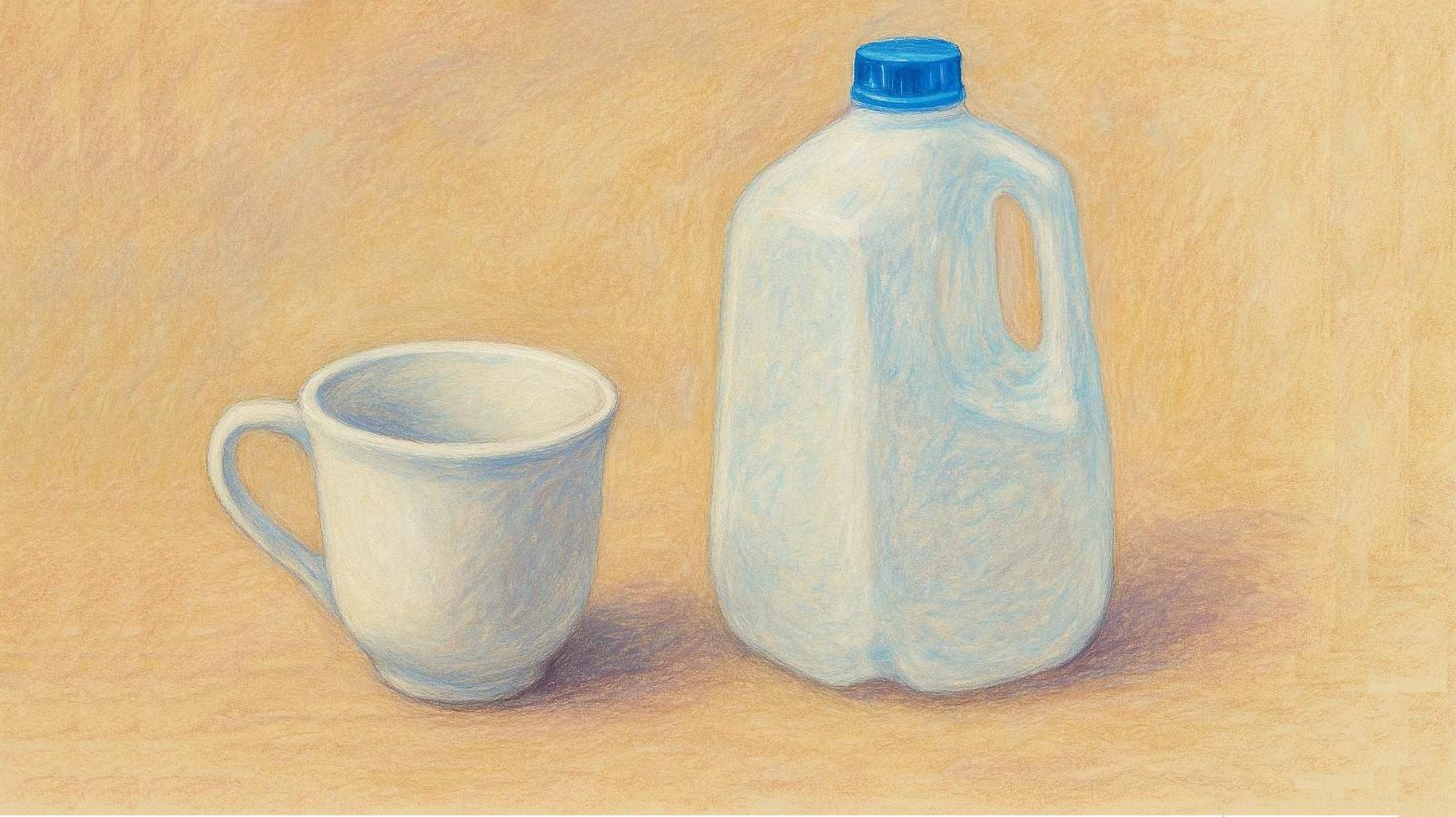
Understanding how to convert between cups and gallons is one of the most practical measurement skills in daily life. Whether you’re following a recipe, mixing cleaning solutions, or working on a DIY project, knowing how many cups are in a gallon saves time and prevents costly mistakes.
Yet, the answer isn’t as simple as it seems — because not all gallons are equal. The U.S. customary gallon and the U.K. (Imperial) gallon differ, which can cause confusion if you’re reading recipes or instructions from another country.
This guide explains the difference between the two systems and provides a clear cups to gallons conversion table, along with related equivalents in liters and ounces, so you can measure accurately no matter where you are.
What Is a Gallon?
The gallon is a unit of volume used primarily in English-speaking countries, but its exact size depends on the measurement system in use.
U.S. Gallon
In the United States, one U.S. liquid gallon is officially defined as 231 cubic inches, which equals 3.78541 liters. It’s most commonly used for measuring liquid capacity — water, milk, gasoline, and other fluids.
Imperial (U.K.) Gallon
The Imperial gallon, used in the United Kingdom, Canada (for some measurements), and a few Caribbean nations, is larger. It equals 4.54609 liters. The Imperial gallon was standardized in 1824 and is still used for labeling fuel efficiency (miles per gallon) in the U.K. and Canada.
Dry Gallon
There is also a lesser-known U.S. dry gallon, used historically for measuring dry goods such as grains. It equals 268.8025 cubic inches or about 4.4049 liters, but it’s rarely encountered today.
Historical Background
The concept of a gallon dates back to medieval England, where various types of gallons existed depending on the substance measured — one for wine, one for ale, and one for dry goods. When the U.S. adopted its system, it kept the wine gallon, which was smaller. The U.K., however, later standardized its Imperial gallon to be larger.
As a result, the same word — “gallon” — now represents two different volumes depending on where you are.
How Many Cups in a Gallon?
The short answer — and the one most people are looking for — is:
1 U.S. gallon = 16 U.S. cups
That’s the simple conversion used in most American kitchens and U.S.- based recipes.
Breaking It Down
1 U.S. gallon = 128 U.S. fluid ounces
1 U.S. cup = 8 U.S. fluid ounces
When you divide 128 by 8, you get 16 cups per gallon.
Imperial Conversion
In the U.K. and countries that use the Imperial gallon, the numbers change slightly because of the larger gallon size:
1 Imperial gallon = 160 Imperial fluid ounces
1 Imperial cup = 10 Imperial fluid ounces
That means 1 Imperial gallon = 16 Imperial cups as well, but since each Imperial cup is larger, the actual liquid volume is greater than the U.S. equivalent.
Comparison in Liters
1 U.S. gallon = 3.785 liters
1 Imperial gallon = 4.546 liters
Even though both systems have 16 cups in a gallon, the total liquid volume differs by nearly 0.76 liters, which is significant in recipes or measurements requiring precision.
Real-World Examples
In Cooking:
If a recipe calls for one gallon of broth and you’re using a U.S. gallon, that equals 16 cups or 3.785 liters. If the recipe was written in the U.K. and calls for an Imperial gallon, you’d need about 4.546 liters — nearly an extra 20%.
In DIY Projects:
When mixing paint or cleaning solutions, a gallon’s difference can alter the mixture ratio. Understanding which gallon your formula refers to ensures correct proportions.
In Science and Education:
Students working on experiments involving liquid volume often need to convert between cups, gallons, and liters. Knowing both systems prevents cross-system confusion.
Cups to Gallons Conversion Table
Here’s a simple conversion table you can use for quick reference. All values are based on the U.S. liquid measurement system, the most common in recipes and household use.
Cups | Gallons | Liters (approx.) |
|---|---|---|
1 cup | 0.0625 gal | 0.236 L |
2 cups | 0.125 gal | 0.473 L |
4 cups | 0.25 gal | 0.946 L |
8 cups | 0.5 gal | 1.89 L |
12 cups | 0.75 gal | 2.84 L |
16 cups | 1 gal | 3.78 L |
If you’re using Imperial measurements, remember that 1 Imperial gallon equals 4.546 liters, so the conversion to liters will differ slightly, even though the number of cups remains 16.
Related Conversions
Since many recipes and projects involve fractions of a gallon, here are other helpful conversions within the same system:
Measurement | Cups (U.S.) | Gallons (U.S.) | Liters (approx.) |
|---|---|---|---|
1 pint | 2 cups | 0.125 gal | 0.473 L |
1 quart | 4 cups | 0.25 gal | 0.946 L |
½ gallon | 8 cups | 0.5 gal | 1.89 L |
1 gallon | 16 cups | 1 gal | 3.78 L |
These relationships form the foundation of the U.S. customary volume system, which is hierarchical:
2 cups = 1 pint
2 pints = 1 quart
4 quarts = 1 gallon
The Imperial system follows the same structure but with larger absolute values due to the bigger gallon.
U.S. vs U.K. (Imperial) Gallons: A Closer Look
This is one of the most common sources of confusion, especially for international readers. Let’s compare them directly:
System | 1 Gallon Equals | 1 Cup Equals | Total Cups per Gallon | Liters |
|---|---|---|---|---|
U.S. Liquid | 128 U.S. fl oz | 8 U.S. fl oz | 16 U.S. cups | 3.785 L |
Imperial (U.K.) | 160 Imp. fl oz | 10 Imp. fl oz | 16 Imp. cups | 4.546 L |
So while both use “16 cups per gallon,” an Imperial cup holds more liquid than a U.S. cup. Always check your recipe or formula source to know which standard is intended.
How to Convert Cups to Gallons and Vice Versa
For quick mental math, you can use these formulas:
Gallons = Cups ÷ 16
Cups = Gallons × 16
Example 1:
If you have 32 cups of water:
32 ÷ 16 = 2 gallons
Example 2:
If you need 0.5 gallon of milk:
0.5 × 16 = 8 cups
These straightforward conversions are helpful in kitchens, workshops, and science labs alike.
Conversions Between Gallons, Cups, and Liters
Because the liter is the international standard for measuring volume, here’s how gallons and cups relate to it:
Unit | U.S. Value | Imperial Value |
|---|---|---|
1 gallon | 3.785 L | 4.546 L |
1 cup | 0.236 L | 0.284 L |
1 liter | 4.226 cups | 3.52 cups |
This means a 2-liter bottle equals roughly 8.45 U.S. cups or 7.04 Imperial cups — another useful conversion when adapting recipes across systems.
Why Conversions Matter
Accurate measurement is essential not just for cooking but for chemistry, crafts, and even automotive care. For instance:
In cooking, misjudging the conversion between gallons and cups can make a recipe too thick, too runny, or improperly seasoned.
In science, precise volume measurement ensures reliable experiment results.
In DIY and home improvement, correct proportions maintain consistency in paint colors or cleaning formulas.
Understanding these relationships empowers anyone to move confidently between systems — whether metric, U.S. customary, or Imperial.
Frequently Asked Questions
How many cups are in a half gallon?
There are 8 cups in a half U.S. gallon.
Is a dry gallon the same as a liquid gallon?
No. A U.S. dry gallon is slightly larger (about 4.404 liters) than a U.S. liquid gallon (3.785 liters).
How many cups in a quart or pint?
1 quart = 4 cups
1 pint = 2 cups
Is a U.S. gallon the same as a U.K. gallon?
No. The U.K. (Imperial) gallon is about 20% larger than the U.S. gallon.
How many ounces in a gallon?
1 U.S. gallon = 128 fluid ounces
1 Imperial gallon = 160 fluid ounces
Conclusion
To summarize, the conversion you’ll use most often is straightforward:
1 U.S. gallon equals 16 U.S. cups (or 3.785 liters).
The Imperial gallon used in the U.K. and some Commonwealth countries also equals 16 cups — but they’re larger cups, resulting in 4.546 liters per gallon.
When dealing with recipes, measurements, or fluid capacities, always confirm which standard your source follows. With this cups-to-gallons conversion chart, you can navigate any recipe or project confidently, no matter where it originates.