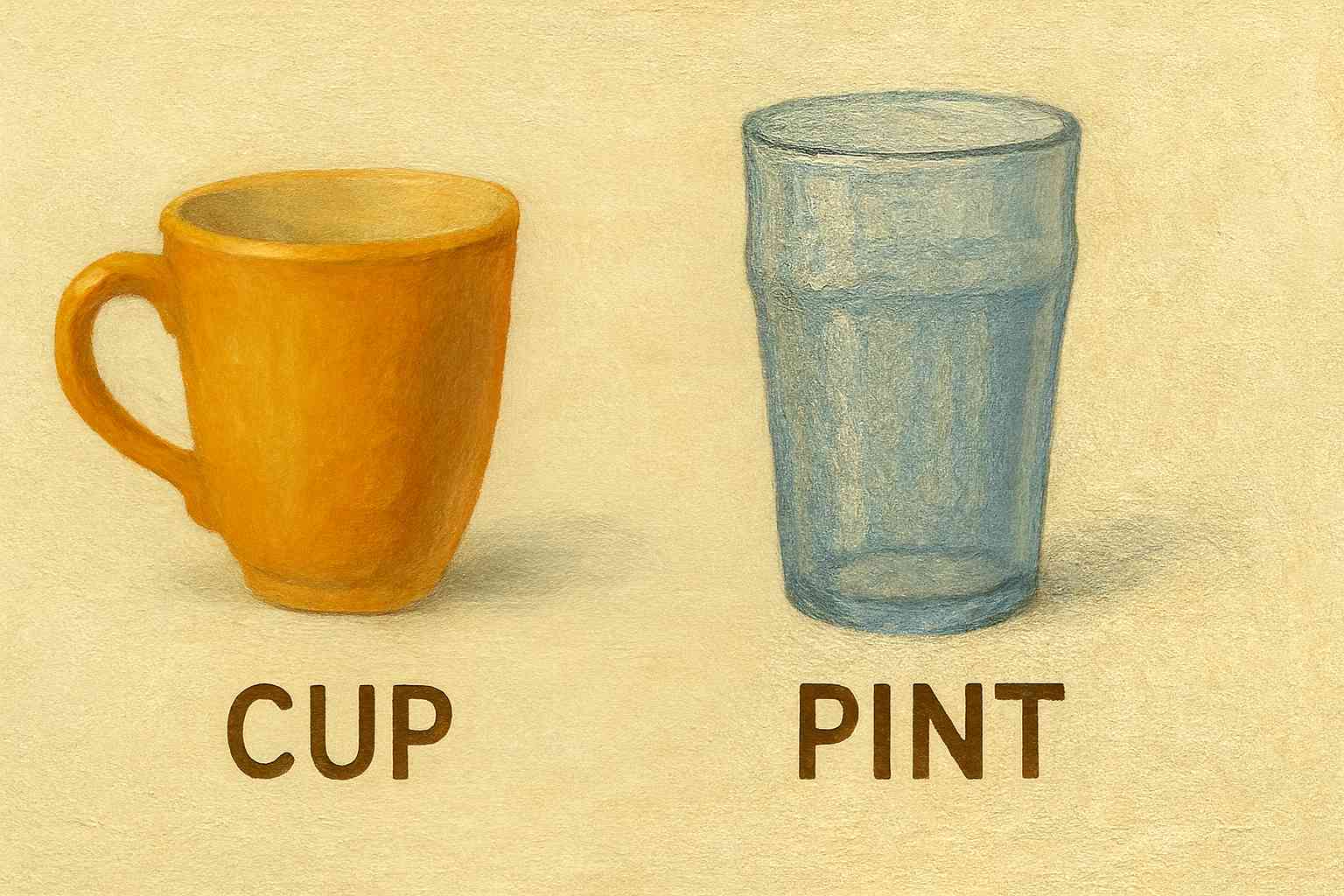
Volume measurement is essential in cooking, baking, and mixology. Recipes often vary across English-speaking countries, where U.S., U.K., Canadian, and Australian systems differ. Even with widespread metric use, units like cups and pints remain common and can cause confusion. One frequent question is: How many cups are in a pint? This article explains the exact conversions, differences between U.S. and U.K. pints, helpful charts, and how to measure ingredients accurately.
The Basic Answer: How Many Cups Are in a Pint?
In the United States, the answer is straightforward:
1 U.S. pint = 2 U.S. cups
This relationship is defined by the U.S. customary system, in which:
1 cup = 8 fluid ounces
1 pint = 16 fluid ounces
Since a pint contains exactly twice as many fluid ounces as a cup, the conversion remains constant across liquid measurements.
Quick Reference Table (U.S. System)
Pints | Cups |
|---|---|
1/4 pint | 1/2 cup |
1/2 pint | 1 cup |
1 pint | 2 cups |
1.5 pints | 3 cups |
2 pints | 4 cups |
4 pints (1 quart) | 8 cups |
This table works for liquids measured under the U.S. customary system and is commonly used in cooking, baking, and beverage preparation.
U.S. vs. U.K. Pints: What’s the Difference?
Although the terms pint and cup appear in several English-speaking countries, they do not mean the same thing everywhere. This is where confusion often begins.
U.S. Pint (Customary System)
1 U.S. pint = 16 U.S. fluid ounces (473 mL)
U.K. Pint (Imperial System)
1 U.K. pint = 20 Imperial fluid ounces (568 mL)
The difference comes from the older imperial measurement system historically used across the British Commonwealth. Today, the imperial pint remains common in the United Kingdom for beverages and some household uses. Canada once used the imperial pint but has largely transitioned to metric, although legacy measurements still appear in certain contexts. Australia primarily uses metric, but older recipes may reference cups and pints.
So how many cups are in a U.K. pint?
The answer depends on the size of the “cup,” because the U.K. does not use cups as an official volume unit. If referencing the U.S. cup:
1 U.K. pint ≈ 2.4 U.S. cups
The larger size of the imperial pint means it holds more liquid than the U.S. pint.
Why Recipes May Differ
A recipe written in the United States assumes:
1 pint = 2 cups
1 cup = 240 mL (approx.)
A recipe written in the United Kingdom may use:
1 pint = 568 mL
Metric milliliters instead of cups
This leads to differences in ingredient quantities when converting between systems, which is why clarity is essential when following or adapting recipes across regions.
Cups to Pints Conversion Chart
Below is a handy conversion chart for quick reference. These figures apply to the U.S. customary system, where the cup-to-pint relationship is standardized.
Cups to Pints (U.S.)
Cups | Pints |
|---|---|
1/2 cup | 1/4 pint |
1 cup | 1/2 pint |
1.5 cups | 3/4 pint |
2 cups | 1 pint |
3 cups | 1.5 pints |
4 cups | 2 pints |
6 cups | 3 pints |
8 cups | 4 pints (1 quart) |
12 cups | 6 pints |
16 cups | 8 pints (1 gallon) |
Pints to Cups (U.S.)
Pints | Cups |
|---|---|
1/4 pint | 1/2 cup |
1/2 pint | 1 cup |
1 pint | 2 cups |
2 pints | 4 cups |
3 pints | 6 cups |
4 pints | 8 cups |
6 pints | 12 cups |
8 pints | 16 cups |
These conversions help home cooks, bakers, and bartenders scale measurements up or down without the need for a calculator.
How to Measure Liquids and Dry Ingredients Accurately
Even when conversions are known, the accuracy of the final result depends on the method of measuring. This is especially important in baking, where precision affects texture, structure, and flavor.
Liquid vs. Dry Measuring Cups
Although both are called “cups,” they are not identical tools:
Liquid measuring cups are designed with a spout and extra space above the measurement line. They allow the reader to view the level of the liquid without spilling.
Dry measuring cups are meant to be filled to the top and leveled with a straight edge for accuracy.
Using the right type of cup helps ensure consistent volume.
Avoiding Common Measurement Errors
Filling a dry ingredient incorrectly (e.g., scooping flour directly from a container) can compact the ingredient and increase its volume.
Viewing liquid measurements from above or below eye level can create parallax error.
Pouring sticky liquids without a slow, steady stream can lead to uneven amounts.
These errors can change the intended texture or structure of a recipe.
When Weight Measurements May Be More Accurate
While volume measurements are widely used in home kitchens, many professionals prefer weight for certain ingredients because:
The density of dry ingredients varies with humidity, packing, or grinding.
Weight provides a consistent quantity regardless of ingredient structure.
Flour, sugars, and certain dry foods vary significantly by volume, making weight-based measurement more precise. However, cups and pints remain standard in many English-speaking home kitchens.
Practical Uses and Final Tips
Understanding cups and pints is useful in many everyday contexts:
Converting Recipes
Scaling recipes up or down—such as doubling a soup or halving a baking recipe—becomes easier when cup-to-pint relationships are understood.
Mixing Drinks and Beverages
Bartenders and home mixologists often rely on pints for larger servings and cups for small batches.
Batch Cooking and Meal Preparation
Soups, broths, sauces, and stews frequently use pints or cups to scale serving sizes.
Memorizing Common Conversions
A simple rule helps keep things clear:
“Two cups in a pint, two pints in a quart, four quarts in a gallon.”
This rhyme is widely taught in U.S. classrooms and helps reinforce the structure of the customary system.
Conclusion
Knowing how cups and pints convert is key in cooking and baking. In the U.S., 1 pint equals 2 cups, while U.K. pints differ, which can affect recipes. Clear understanding of these units makes adapting and scaling ingredients easier. Accurate measurements help ensure consistent, reliable results.