In the modern world, digital technologies have become an integral part of our lives. Every day we use smartphones, computers, network services, and cloud storage, as well as transmit and store enormous amounts of data. However, we rarely think about how this information is actually measured. How can we understand how much space a photo, video, or text document occupies? What do the numbers on the screen mean when we see messages about internet speed or file size?
Measuring information is the foundation of digital communication and computing. Without a clear understanding of measurement units, it would be impossible to accurately determine memory capacity, data transfer speed, or the efficiency of computational systems. That is why the concepts of bit, byte, kilobyte, megabyte, gigabyte, and terabyte are crucial for everyone who deals with technology — from ordinary users to information systems specialists.
In this article, we will examine the main units of digital information measurement, their relationships, and how they are used in everyday life.
Information in Computer Systems
Information in the digital world is everything that can be represented as numbers, text, images, sounds, or videos. All these types of data are stored and transmitted by computers as sequences of zeros and ones. This approach is based on the binary numeral system, which has only two states: 0 and 1.
These two symbols form the universal language of any computer. Every element of information we see on the screen — from a single letter in a text file to a complex video — is the result of processing millions or even billions of such zeros and ones.
https://convertyze.com/digital/data-storage/
The Smallest Unit – Bit (bit)
What is a Bit
A bit (short for binary digit) is the smallest unit of measurement of digital information. It can have only two possible values: 0 or 1. In physical terms, this may correspond to two states of an electrical signal: voltage present or absent, impulse on or off, magnetic pole positive or negative.
The Role of the Bit in Storing and Transmitting Information
The bit is the fundamental building block of all digital technologies. It is used to describe states in computer memory, to transmit signals across a network, and to perform calculations within a processor. However, a single bit by itself can convey only a minimal amount of information — for example, the answer to a yes/no question.
Therefore, bits are grouped into larger structures — bytes and their multiples — which allow for more efficient storage and processing of complex data.
Byte (B) – The Basic Unit
Definition of a Byte
A byte is the fundamental unit of digital information, consisting of 8 bits. One byte can represent 256 different combinations of zeros and ones (from 00000000 to 11111111). This allows it to encode characters, numbers, and other types of data.
Relationship Between Bit and Byte
1 byte = 8 bits
This ratio is a standard in all modern computer systems. The byte is usually used as the base unit for measuring data volumes — such as file size, memory capacity, or storage space.
Thanks to its universality, the byte serves as a convenient bridge between the abstract world of binary data and the practical use of information.
Kilobit (kb) and Kilobyte (kB)
Explanation of Units
When the amount of information exceeds several hundred bytes, it becomes more convenient to use larger units:
1 kilobit (kb) = 1,000 bits
1 kilobyte (kB) = 1,024 bytes (since it is based on the binary system)
Sometimes, for simplicity, the decimal system is used (1 kB = 1,000 B), but in most cases — especially in programming and computer technology — the binary base is applied: 1 kB = 2¹⁰ = 1,024 bytes.
Difference Between Them and Their Significance
It is important to distinguish between a kilobit and a kilobyte. One kilobyte equals eight kilobits, since 1 byte = 8 bits.
This distinction has practical meaning: data transfer speed in networks is usually measured in kilobits per second (kbps), while file size is measured in kilobytes (kB). Therefore, if the internet speed is 8,000 kbps, it equals approximately 1,000 kB/s.
Megabit (Mb) and Megabyte (MB)
What Are a Megabit and a Megabyte
When data volumes grow even larger, megabits and megabytes are used:
1 megabit (Mb) = 1,000,000 bits
1 megabyte (MB) = 1,024 kilobytes = 1,048,576 bytes
Megabytes are a familiar measure for many users; they indicate the size of small programs, audio files, images, or documents.
Examples of Use
For example:
A typical high-quality photograph may take up about 3–5 MB.
A 3-minute music track is about 4 MB.
Mobile internet speed is often measured in megabits per second (Mb/s); to estimate the real download speed, divide that number by 8.
Gigabit (Gb) and Gigabyte (GB)
Definition
The next level of scaling involves gigabits and gigabytes:
1 gigabit (Gb) = 1,000,000,000 bits
1 gigabyte (GB) = 1,024 megabytes = 1,073,741,824 bytes
Gigabytes have become common in everyday usage since most modern devices operate with memory capacities measured in gigabytes.
Practical Application
The amount of computer RAM is usually measured in gigabytes.
High-resolution video files can occupy tens of gigabytes.
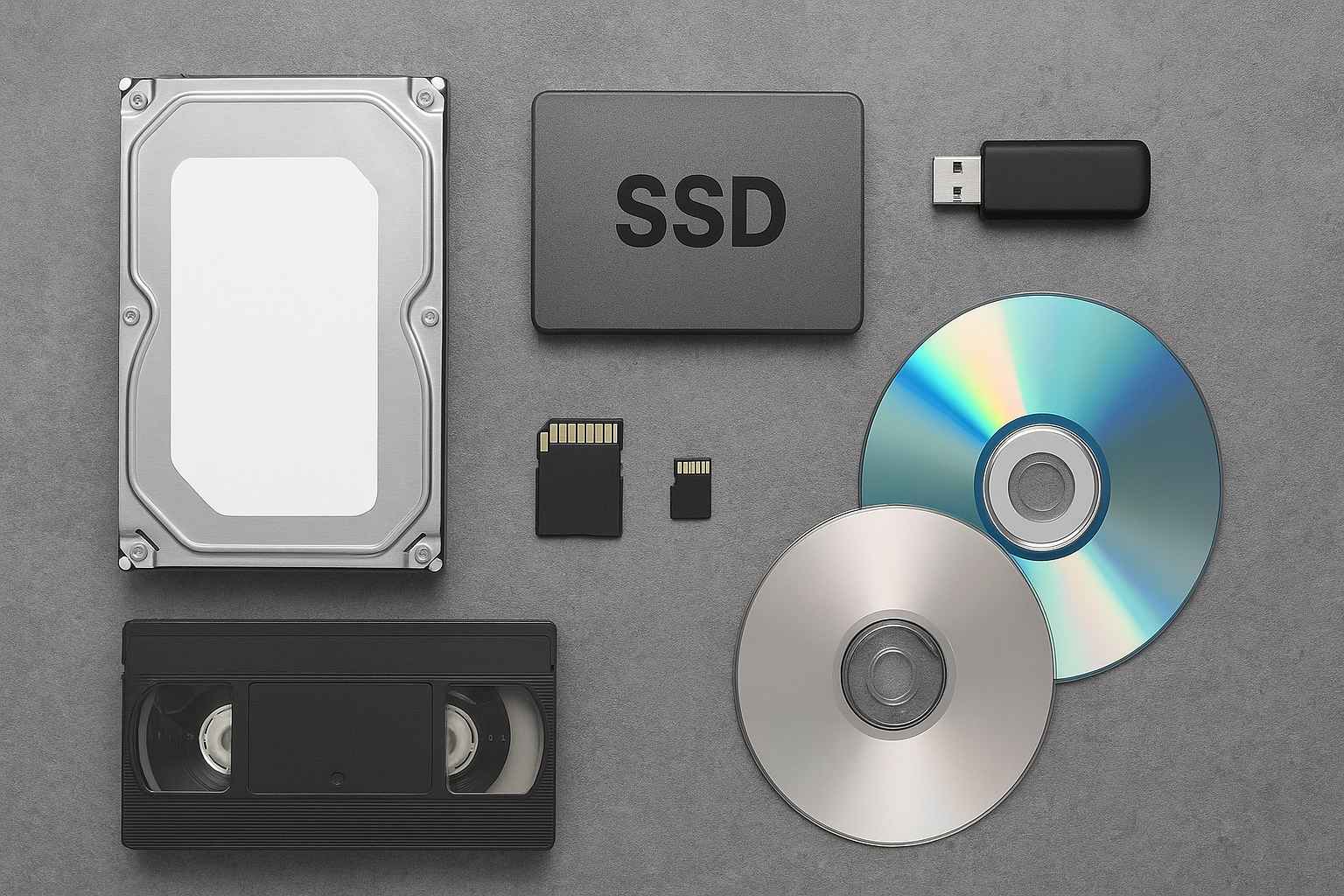
Cloud storage or flash drives often have capacities of several or even dozens of gigabytes.
Understanding the relationship between gigabit and gigabyte also helps evaluate data transfer speeds in networks. For example, if the speed is 1 Gb/s, it equals approximately 125 MB/s.
Terabit (Tb) and Terabyte (TB)
The Largest Units of Measurement
A terabyte is a unit used to measure very large volumes of data:
1 terabit (Tb) = 1,000,000,000,000 bits
1 terabyte (TB) = 1,024 gigabytes = 1,099,511,627,776 bytes
Where They Are Used
Terabytes are used in cases where massive amounts of information must be stored or transmitted, for example:
In archives storing collections of video, audio, or scientific data.
On servers and in data centers that serve millions of users.
In modern large-capacity storage devices.
With technological advancement, the term “terabyte” has become common even among everyday users. However, larger units have already emerged — petabytes, exabytes, and zettabytes — used to describe global data volumes across the planet.
Differences Between Bits and Bytes
Why It’s Important to Understand the Difference
A bit and a byte are not just two different units — they are used in different contexts.
The bit is more often used to measure data transfer speed, while the byte measures data volume.
Misunderstanding this difference can cause confusion. For example, if the internet speed is 100 megabits per second (Mb/s), this does not mean that files can be downloaded at 100 megabytes per second (MB/s). The number must be divided by 8, resulting in an actual speed of about 12.5 MB/s.
Examples Where It Matters
Internet Speed.
Service providers usually indicate speed in megabits per second, but computers or browsers show download speed in megabytes per second. Therefore, users need to understand that these values differ by a factor of eight.File Size.
When copying a video or archive, the size is indicated in bytes. Comparing this directly with network bandwidth measured in bits would yield incorrect results without proper conversion.System Configuration.
Software developers, engineers, and administrators must clearly understand which units are used for system parameters — from RAM to network channel capacity.
Conclusion
The world of digital technology is built on simple yet extremely important units of information measurement. From the bit, which represents only two states — 0 and 1, to the terabyte, which contains trillions of bytes — all these quantities form the foundation of data storage, processing, and transmission.
Understanding the relationships between these units helps:
more accurately estimate file and memory sizes;
correctly interpret internet speeds;
work more efficiently with digital devices.
In today’s world, where the volume of data grows every second, literacy in information measurement is not only a technical necessity but also part of digital culture.
Knowing that 1 byte = 8 bits, and that data then scales into kilobytes, megabytes, gigabytes, and terabytes, gives us the key to understanding computing processes, digital technologies, and the information society as a whole.
Thus, the units of digital information measurement are not just numbers and symbols — they are the language spoken by the digital world. Understanding this language opens the path to conscious and effective use of technology in our daily lives.